In the global industrial marketplace, trust is the ultimate currency. When a manufacturer buys components, a hospital uses medical instruments, or an aerospace company relies on sensors, they must be absolutely certain that every measurement is accurate. But how can businesses verify that the laboratories testing these products are actually competent?
The answer lies in a rigorous global evaluation process. Understanding what is accreditation, how it operates, and why it forms the backbone of international trade is essential for any modern quality manager.
This comprehensive guide breaks down the core definitions, standard frameworks, and the critical business impacts of formal accreditation.
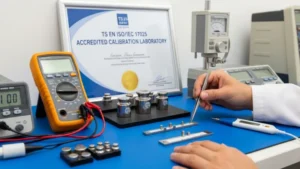
At its core, accreditation is the formal, third-party recognition that a conformity assessment body possesses the technical competence, impartiality, and integrity to perform specific calibration, testing, or inspection tasks.
Unlike internal company standards, this recognition comes from an independent, authoritative governmental or semi-governmental organization known as an Accreditation Body. These bodies evaluate laboratories against international standards to ensure total consistency across the globe.
Accreditation acts as an official stamp of technical competence. It proves that a facility does not just have a working quality system, but that its engineers are fully capable of delivering precise, repeatable results under strict scientific conditions.
Many professionals mistakenly use the terms accreditation and certification interchangeably. However, in the world of global standardization and metrology, they have completely distinct meanings.
Certification focuses on conformity to a management system standard. For example, when a facility complies with ISO 9001, it receives a certificate proving its administrative processes are documented and controlled. Certification evaluates the process, not the technical measurement capability of individual tools.
Accreditation goes a giant step further by evaluating technical competence. An audit for accreditation looks directly at the qualifications of the engineers, the specific calibration methods used, the environmental controls of the facility, and the calculation of measurement uncertainty.
While certification proves you follow your own written procedures, accreditation proves your technical data is scientifically accurate and globally valid. To see this technical competence in action, you can explore our official ISO/IEC 17025 Accreditation parameters.
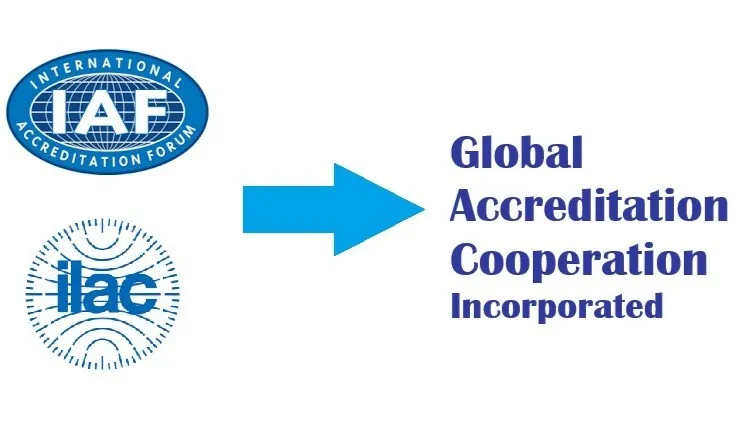
How does an accredited document issued in one country remain valid across the rest of the world? This global acceptance is governed by international metrology networks:
Through the ILAC Mutual Recognition Arrangement, all signatory accreditation bodies agree to accept each other’s test results. This cross-border agreement creates the concept of tested once, accepted everywhere, which drastically lowers trade barriers and reduces the need for redundant testing when exporting goods overseas.
For calibration and testing facilities, the absolute gold standard is ISO/IEC 17025. This standard sets strict requirements for laboratory operations, demanding rigorous evaluation of specific technical metrics.
During a formal audit, assessors deeply analyze:
If you are a quality engineer preparing for an audit, understanding these data parameters is critical. You can read our detailed step-by-step breakdown on how to read a calibration certificate to see how these accredited uncertainty metrics are displayed on official paperwork.
Partnering with an accredited metrology provider is a proactive strategy to reduce risk and protect your operational bottom line.
Using non-accredited laboratories introduces massive legal and operational risks. If a factory tool drifts out of specification, it can cause an entire batch of commercial products to fail. Choosing an accredited partner ensures your measurements are secure, avoiding costly product recalls and brand damage.
Whether your facility is subject to strict FDA inspections, aerospace requirements, or standard industrial audits, having accredited paperwork keeps you completely compliant. To learn more about customized industrial applications, explore our dedicated Industrial Calibration Solutions page.
Because accredited data is recognized globally, your products can enter foreign markets seamlessly without requiring expensive, time-consuming re-testing by international customs or overseas buyers.
To protect your business compliance loop, always follow these validation steps before shipping your equipment to a metrology provider:
Understanding what is accreditation requires looking closely at how an authoritative body evaluates a laboratory. The assessment protocol is not just a quick inspection; it is an intense, multi-day technical evaluation. If you want to comprehend what is accreditation in practical terms, you must look at how auditors witness active calibrations.
During this process, international assessors do not simply review paperwork. They challenge the calibration technicians, check the environmental loggers, and verify the accuracy of the master reference standards. This exhaustive peer-review framework is exactly what is accreditation‘s main power, ensuring that no laboratory can issue falsified or inaccurate calibration reports to its industrial clients.
When exporting commercial products overseas, many manufacturers ask, “What is accreditation’s direct benefit at international borders?” Without a globally recognized quality stamp, your components can be rejected or held at foreign customs for costly re-testing.
This is exactly what is accreditation solves through the ILAC Mutual Recognition Arrangement (MRA). When a calibration lab achieves this status, its data is legally accepted in over 100 countries. Therefore, knowing what is accreditation and choosing an accredited partner like Rezonans Kalibrasyon acts as a technical passport for your products, guaranteeing frictionless entry into European and global marketplaces.
In high-risk industries like aerospace manufacturing, defense, and medical devices, the definition of what is accreditation changes from a voluntary quality option into a strict legal requirement. If a legal dispute or safety incident occurs, corporate lawyers and government auditors will immediately investigate your measurement traceability loop.
They will explicitly ask what is accreditation status of the vendor that calibrated your production line sensors. Having fully compliant, traceable paperwork proves that your corporation exercised maximum technical due diligence. Now that you fully understand what is accreditation and its profound impact on corporate liability, you can secure your supply chain with total confidence.
Understanding what is accreditation helps businesses make informed, safe choices regarding their manufacturing quality control. It is the definitive bridge that transforms raw measurement data into trustworthy, globally accepted technical facts. By selecting an accredited metrology provider, you ensure absolute accuracy, full audit compliance, and frictionless global trade.
Do you have high-stakes equipment that requires fully traceable, accredited verification? Review our complete portfolio on the Calibration Services page, or get in touch with our engineering support team directly via our Contact Page to schedule your next traceable optimization run.