Rezonans Kalibrasyon — Medical Calibration Laboratuvarı
Advancements in medical technology have made instrument precision as critical as the human factor in diagnosis, monitoring, and treatment phases. From real-time data flows in operating theaters to biochemical analyses in laboratories, every medical process depends strictly on millimetric and error-free measurements. As Rezonans Biomedical Calibration, we provide ISO/IEC 17025 accredited medical calibration services that guarantee the measurement accuracy of medical devices and ensure full compliance with international standards.
Eliminating measurement deviations that occur over time due to environmental factors or heavy usage is not just a regulatory obligation; it is the most critical process that directly safeguards human life. To ensure reliable measurement results, we undertake the periodic metrological tracking of all equipment across your healthcare facility using professional medical calibration reference standards that are fully compliant with global criteria.
What Is Medical Calibration and Why Is It Vital?
Medical calibration is the technical process of comparing the values displayed by a medical device against known national or international reference standards to determine measurement accuracy, identify deviations, document results, and issue official certification. Electrical, mechanical, and environmental wear can cause significant gaps between the values read on a device’s display and the actual values delivered to the patient.
Every digital reading in a hospital, every micro-pipette draw in a lab, and every vital sign monitored in an ICU depends entirely on the precision of this process. Uncalibrated or poorly executed medical device calibration workflows can lead to:
Misdiagnosis & Incorrect Treatments: Misleading biochemistry laboratory outputs, faulty patient monitor parameters, or inaccurate ECG signals can cause clinicians to implement wrong or unnecessary treatment protocols due to a lack of proper medical calibration services.
Critical Patient Risks: High-risk surgical devices like electrosurgical units (ESU/electrocautery) or ventilators may deliver insufficient or excessive energy/gas outputs, resulting in irreversible tissue damage or respiratory failure.
Regulatory Compliance Failures: Healthcare facilities face non-compliance reports during Ministry of Health audits, as well as ISO 9001, ISO 13485, and JCI (Joint Commission International) accreditation reviews, leading to loss of institutional prestige and financial damage.
Full-Scope Biomedical Device Calibration Services
Supported by an experienced team of biomedical engineers and technicians, our modern laboratory infrastructure offers both on-site (on-the-vessel/in-hospital) and in-lab calibration options across a broad matrix of medical equipment groups:
1. Life Support & Intensive Care Unit (ICU) Group
Calibration of instruments in this segment directly impacts patient survival rates, tracking precision, and micro-medication dosages.
Defibrillator Units: Ensuring these life-saving devices deliver the exact requested energy in Joules (J) at the precise millisecond during cardiac arrest is of vital importance.
Ventilators & Anesthesia Machines: Artificial respiration volumes, oxygen percentages, and anesthetic gas concentrations delivered to patients in ICUs and operating theaters are verified using advanced respiratory simulators during medical calibration procedures.
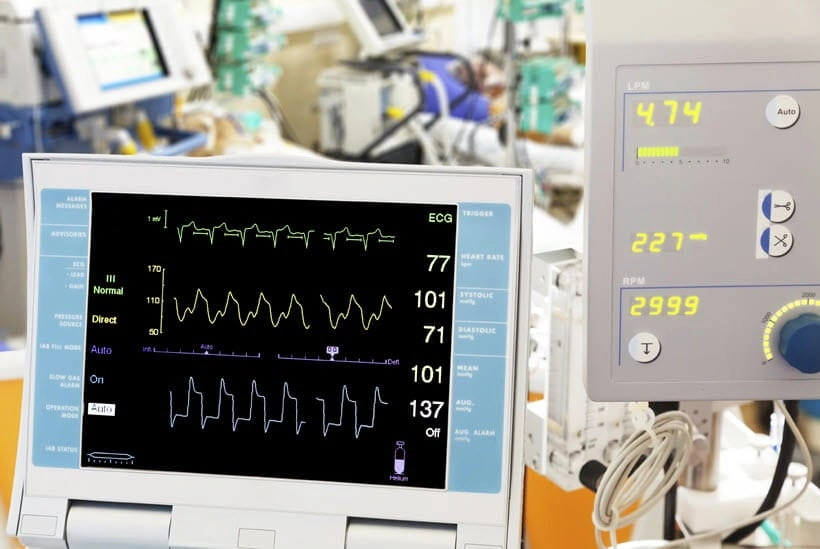
Patient Monitors: Precise validation of vital parameters including Pulse, Respiration, NIBP (Non-Invasive Blood Pressure), IBP (Invasive Blood Pressure), Temperature, and SpO2 (Oxygen Saturation).
Infusion & Perfusion Pomp Systems: Flow rates, volume delivery, and occlusion pressure controls are thoroughly tested for mechanisms that inject critical medications at micro-levels.
ECG Machines: Complete biomedical calibration, signal verification, and specialized module repair services.
2. Diagnostic, Imaging & Surgical Systems
Verification protocols designed to ensure surgical operations are conducted safely and illnesses are diagnosed correctly.
X-Ray & Dental Periapical Systems: Exposure dosages, kV, mA, timing intervals, and image quality are calibrated to meet international radiation safety guidelines.
Electrosurgical Units (ESU): High-frequency (RF) currents utilized for tissue cutting, coagulation, and desiccation during surgeries are validated using specialized ESU analyzers.
Surgical Aspirators & Vacuum Gauges: Continuous suction power and vacuum gauge accuracy, which are essential for clearing blood and fluids from the surgical site, are precisely measured.
3. Laboratory & Sterilization Equipment Group
Medical analysis reliability, test reproducibility, and surgical instrument hygiene standards rely entirely on these metrological tests.
Automatic Micropipettes & Centrifuges: Liquid transfer volumes are tested down to micro-levels using precision balances, while rotation speeds (RPM) and timers are checked via optical tachometers.
Autoclaves, Sterilizers & Ovens: Internal temperature distribution, sterilization hold times, and pressure balances are mapped and graphed using multi-channel data loggers.
Medical Refrigerators & Blood Banks: Storage temperatures required to keep sensitive biological materials, vaccines, and blood bags from degrading are metrologically verified.
4. General Medical Examination, Safety Tests & Dentistry
Covers auxiliary hardware used heavily across polyclinics, infirmaries, family health centers, and dental clinics.
Sphygmomanometers (Blood Pressure Monitors): Digital, mechanical, and mercurial blood pressure units, alongside BP Holters, undergo chamber verification via simulators.
Dental Chairs & Units: Functional testing of dental patient chairs, integrated operating lights, scalers (cavitron), and turbine (aerator) systems are performed directly on-site.
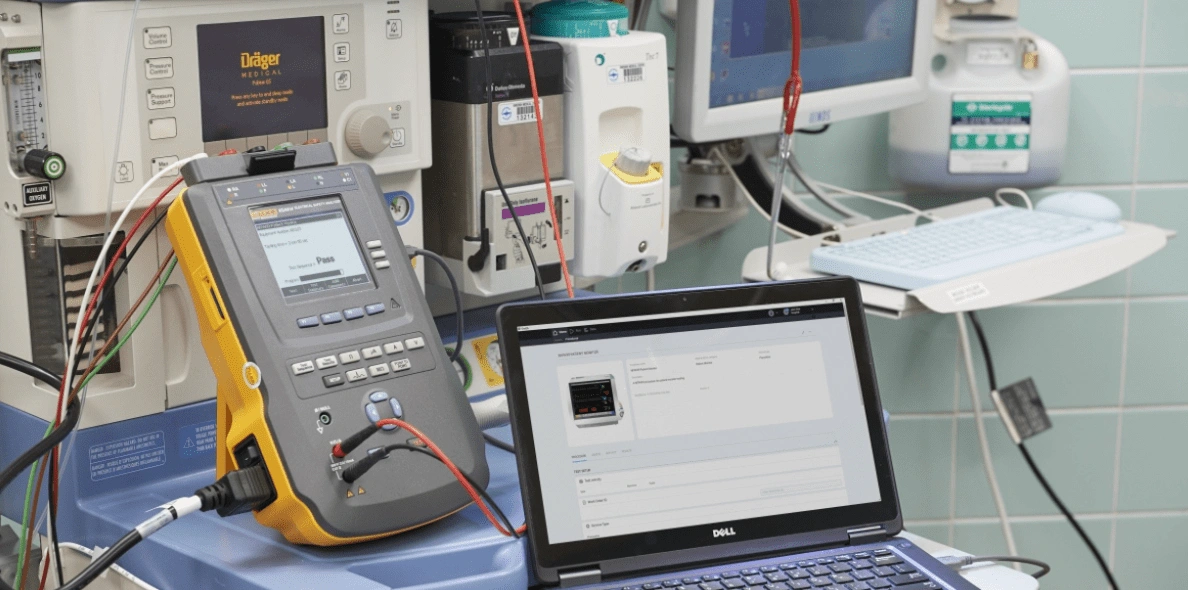
Electrical Safety Testing (EST): Measuring chassis leakage currents, patient leakage currents, and ground continuity to completely eliminate the risk of electrical shock for both patients and medical staff. These tests are mandatory according to IEC 60601 and IEC 62353 standards.
Frequency of Medical Device Calibration
The testing and calibration intervals for medical equipment vary based on device types, usage frequency, manufacturer guidelines, environmental conditions, and clinical risk levels:
High-Risk & Newly Commissioned Equipment: A newly purchased or overhauled anesthesia machine or ventilator may require more frequent tracking during its first year of operation. High-risk devices like electrosurgical units, which carry a surgical burn risk, should undergo periodic inspection every 500 uses or at least every 6 months.
Routine Diagnostic & Measuring Instruments: ECG machines, patient monitors, lab scales, microscopes, and standard clinic gear should be calibrated at least once (1) a year under accepted standards.
Out-of-Schedule Situations: If a device is dropped, undergoes technical repairs, has critical spare parts replaced, or if clinical staff notes suspicious measurement variances, the instrument must be recalibrated immediately without waiting for its scheduled cycle.
⚓ Medical Calibration Compliance & Technical Standards
To maintain absolute patient safety, international health organizations and quality metrics demand verifiable instrument precision. Implementing a rigorous medical calibration program ensures that your clinical monitors always operate within acceptable tolerances. Hospital managers must remember that medical calibration services are not just administrative checkboxes; they are technical necessities required to prevent catastrophic diagnostic errors.
Whether your facility needs routine hospital maintenance or a pre-accreditation checklist verification, our tailored biomedical calibration solutions guarantee seamless operational continuity. By keeping your sensors updated through regular medical device calibration, you safeguard both your clinical staff and your healthcare investments against unforeseen technical breakdowns in medical procedures.
🌐 International Medical Standards & Reference Links
Our biomedical procedures strictly adhere to global health conventions and leading technical frameworks to guarantee universal acceptance during all international healthcare audits:
IEC Medical Standards: Review the official global safety criteria for medical electrical equipment via the International Electrotechnical Commission (IEC). (External Link – Open in new tab)
Global Health Accreditation: Check international healthcare quality benchmarks on the Joint Commission International (JCI) portal. (External Link – Open in new tab)
Full Industrial Metrology: Explore our complete laboratory capabilities on our Accredited Calibration Services home page. (Internal Link)
Professional Development: To improve your clinical team’s awareness of measurement deviations, discover our Expert Calibration Training programs. (Internal Link)
📝 Quality Assurance via Certified Biomedical Metrology
In an ecosystem where clinical diagnostics determine treatment pathways, standardizing medical hardware is the anchor of safety. An ICU monitor verified by Rezonans Calibration delivers the exact same reliability whether it is operating in an emergency room or a high-tech research facility.
By merging our strict ISO/IEC 17025 quality management system with practical biomedical engineering experience, we provide hospital directors, technical superintendents, and chief doctors with absolute peace of mind. Our certified documentation acts as a legal shield during healthcare inspections, while our precise calibrations ensure machinery longevity. Trust Rezonans Calibration to safeguard your healthcare facility’s operational integrity across all medical procedures.
📞 Contact Our Medical Experts / Request a Quote
Is your healthcare facility preparing for a Ministry of Health audit, a JCI inspection, or a periodic quality review? Don’t risk compliance deficiencies. Contact Rezonans Calibration today to book an on-site mobile biomedical team or request a competitive annual calibration agreement quotation.