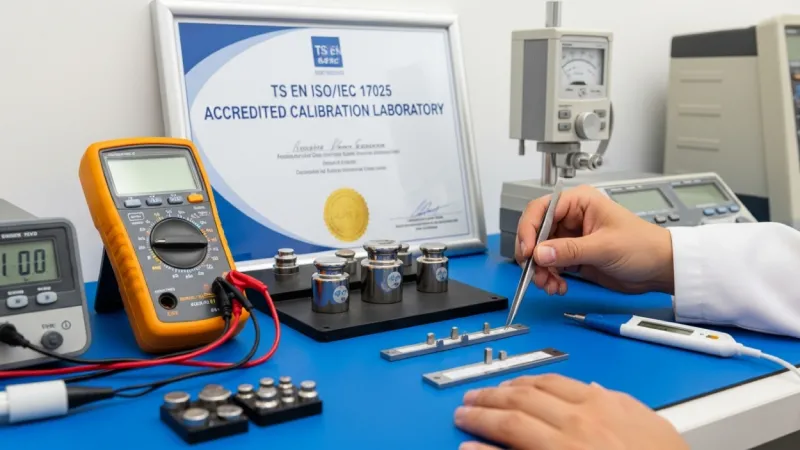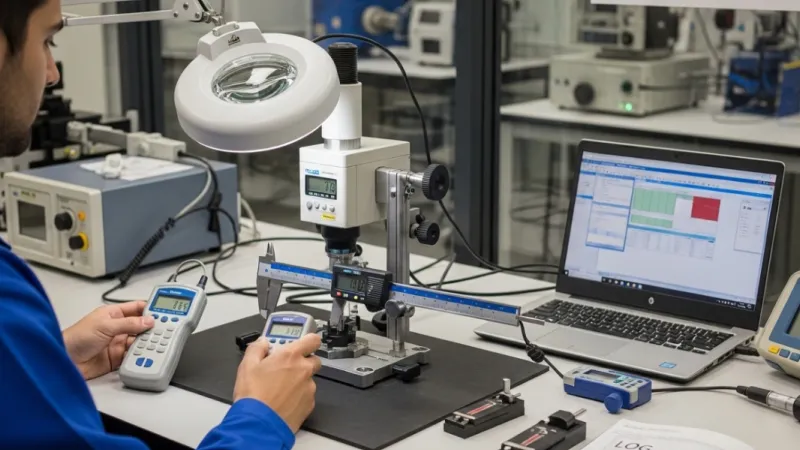
Calibration is the process of evaluating the performance of a measuring instrument by comparing it against a reference measurement standard or a system with known accuracy under specified conditions. This systematic process determines the degree of deviation from the true value and documents the findings in a formal calibration report.
In simpler terms, calibration is a quality control measure that verifies whether a device is measuring correctly, identifies errors, and ensures those findings are officially recorded.
Beyond just checking accuracy, this process guarantees equipment reliability, manufacturing precision, and adherence to global quality standards.
Calibration is vital in industries where measurement precision is non-negotiable. From manufacturing and engineering to laboratories and the healthcare sector, accurate measurements are mandatory for ensuring quality, safety, and operational integrity.
Instruments that are not calibrated can develop measurement errors over time. If left undetected, these errors can lead to:
Consequently, Quality Management Systems (QMS) treat calibration as a mandatory and fundamental quality control requirement.
Implementing a rigorous calibration program offers several strategic advantages:
Calibration is an experimental scientific study. Therefore, it must be conducted under strict laboratory conditions to ensure valid results.
Key elements of a professional calibration process include:
If calibration reveals that a device’s error exceeds the permissible limits for its intended use, an adjustment is required.
Important Note: Once an adjustment is made, the device must be re-calibrated and a new report must be issued. This verifies that the adjustment successfully returned the device to its required accuracy.
A common misconception is that a device only needs attention if it is “broken.” However, a device can be fully functional (powering on and running) while providing completely incorrect data.
It is essential to distinguish between these two services:
Pro Tip: Calibration is necessary for new equipment before its first use, after any repair, and at regular scheduled intervals.
Organizations with a high “calibration consciousness” understand that measurement accuracy directly impacts performance. In sectors like healthcare, where the margin for error is zero, the stakes are even higher.
To maintain excellence, quality-driven organizations should:
By adopting this proactive approach, businesses can raise their quality standards and secure international credibility.